
оставить сообщение
Если вы заинтересованы в нашей продукции и хотите узнать более подробную информацию, пожалуйста, оставьте сообщение здесь, мы ответим вам, как только сможем.
A solar tile roof is the most common residential platform for PV across Europe, Asia and Latin America, and for good reason: clay and concrete tiles are strong, long-lived and straightforward to work with when the hardware is designed for them. The difference between a clean installation and a roof that leaks for twenty years usually comes down to one component group — the tile roof solar mounting system. Hooks must reach the rafter without crushing the tile, rails must sit high enough for water to drain, and every penetration needs proper flashing. This guide explains how the system works and what to check before you buy.
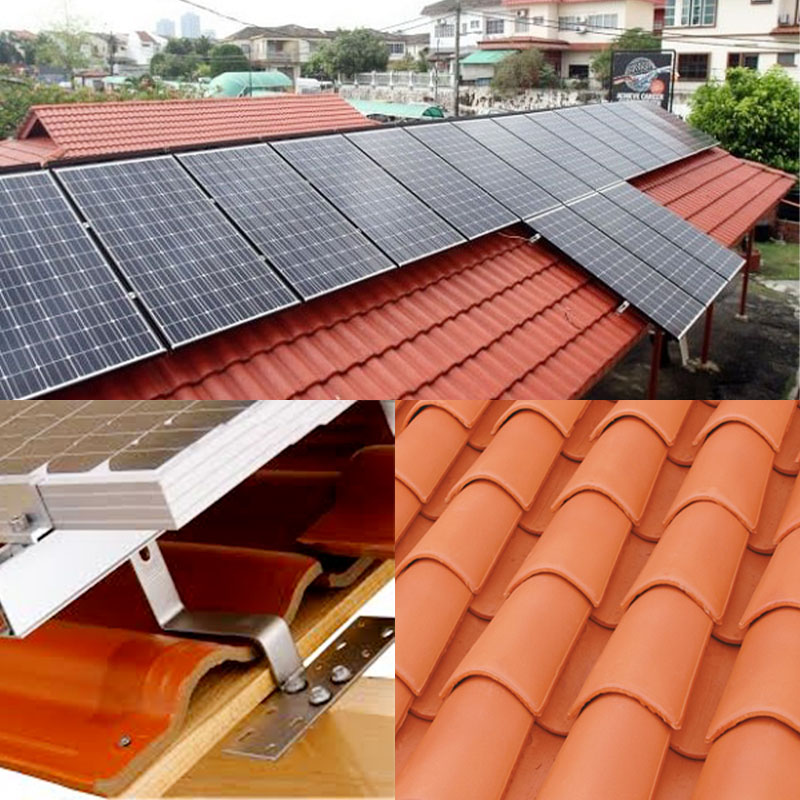
Tiles are laid in overlapping courses over a pitched structure, so the roof already sheds water and the rafter stays accessible from above. Solar panels on a tile roof also benefit from the pitch: a 25–45° slope matches the sun angle in most markets, keeps modules cleaner in rain, and leaves air moving under the array so cell temperature stays lower. Because the covering is repairable, a single lifted tile can be reseated after a hook is fixed, which keeps long-term maintenance simple.
An engineered kit is more than a box of hooks. A complete system normally contains five groups of parts:
Buying these as one matched set is what keeps the load path predictable and the roof warranty intact.
Tile profiles behave differently under a fixing, so hook geometry has to follow the covering.
The hook must follow the S-profile and hold the tile without point loading. Lift or notch one tile, fix into the rafter, then reseat it over the flashing.
These sit closer together, so a low-profile hook and a wider base plate spread the load and avoid cracking the tile edge.
The hook passes through the joint between two tiles. Check that the tile still interlocks after the hook is fitted, or wind-driven rain will find the gap.
Whichever profile you have, choose a hook with an adjustable height so the rail plane can be levelled above an uneven roof. A well-made solar tile roof bracket lets the installer set rail height after the hook is fixed, which removes a second trip to the roof and keeps every rail in one plane.
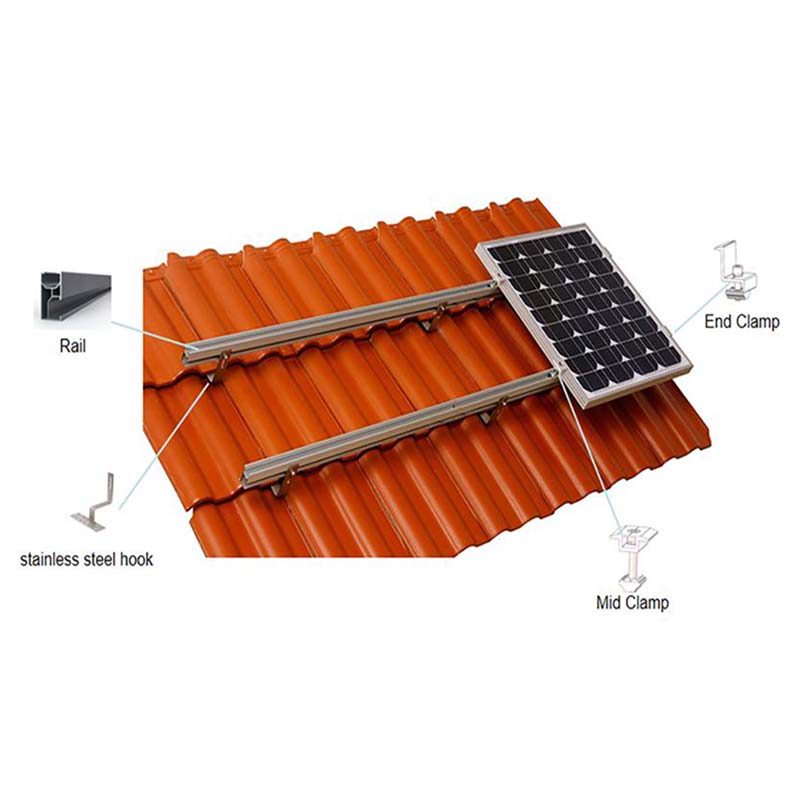
Hook spacing is controlled by the rail span, not by a fixed rule of thumb. The rail supplier publishes a maximum span for a given snow and wind load, and the hooks must sit within that span while each fixing carries its share of the load with the required safety factor. Rafter spacing sets the practical limit. Corners and edges of the array see higher uplift, so they often need closer spacing or a higher-rated hook. Use the project load report rather than copying a distance from another roof.
Yes. A pitched tile roof is one of the best surfaces for PV: good sun exposure, accessible structure and a repairable covering. The key is a mounting system designed for tiles rather than a universal bracket adapted on site.
Usually only one tile per hook is lifted or notched, then reseated over the flashing. On brittle or heritage tiles a small section may need to be removed and reinstated carefully, so assess the covering before quoting the job.
Cost depends on hook type, rail length, clamp count and the test data behind the rating. Stainless hooks and adjustable heights cost more per piece but reduce labour and call-backs, so compare installed cost per kilowatt rather than unit price.
9Sunsolar supplies tile roof hooks, aluminium rails, mid and end clamps and flashing as one matched system, with load data and a bill of materials for each project. Send us your tile profile, rafter spacing, module size and local wind and snow loads, and our team will confirm the layout and quote the full kit.
If your project mixes roof types, the same aluminum solar roof mounting bracket range covers the metal-roof buildings on the same site, so one supplier can handle the whole portfolio.
Подпишитесь на нашу рассылку, чтобы получать обновленную информацию, рекламные акции и идеи.


 Поддерживается сеть IPv6